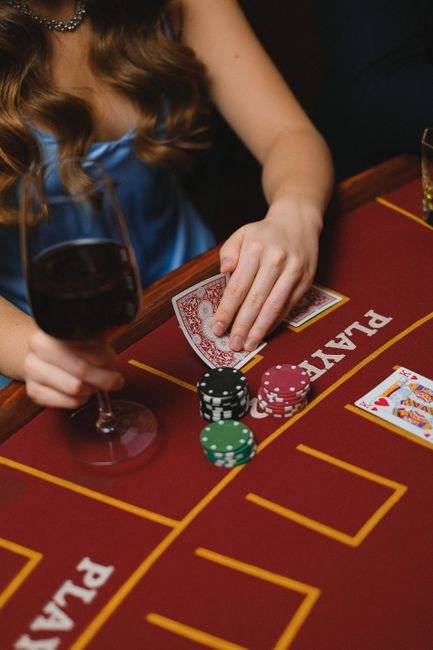


You sit down at a virtual poker table. The flop hits, your opponent hesitates for half a second too long, and you know they're bluffing. That tiny tell—even online—separates winners from donors. iGaming isn't about luck alone. It's a skill game wrapped in chance, and the players who understand the mechanics consistently walk away with more than they brought. Whether you're spinning slots, grinding tournaments, or betting on a Sunday derby, here's what actually moves the needle.
Most slot players pick games based on theme or jackpot size. That's backwards. The single most important number is volatility—how often and how much a machine pays. A low-volatility slot like Starburst (96.1% RTP) hits small wins frequently, keeping your bankroll alive for hours. High-volatility games like Book of Dead (96.2% RTP) can go 200 spins without a payout, then drop a 5,000x win. Neither is better; they suit different goals.
Here's a concrete example: You have $100. On a low-volatility slot betting $0.50 per spin, you might last 400 spins and end with $85. On a high-volatility slot at the same bet, you might bust in 100 spins—or hit $600 on spin 150. Know which experience you want before you press spin. For up-to-date information, visit keonhacaii5.com.co.
In Texas Hold'em, where you sit relative to the dealer matters more than your cards. Playing in late position (button or cutoff) lets you see what everyone else does before you act. You can steal blinds with mediocre hands, control pot size, and bluff more credibly. A player in early position with Ace-Queen is in trouble; the same hand on the button is a raising machine.
Consider this: In a 6-max game, you should play roughly 20-25% of hands from early position, but 40-50% from the button. That's not tight—that's strategic. The math backs it up. Over 100,000 hands, late-position play generates about 60% more profit per hand than early-position play, according to tracking software data.
If you play $10 sit-and-gos, your bankroll should be at least $200. For multi-table tournaments with 1,000+ entrants, you need 100 buy-ins. Why? Variance in large fields is brutal. Even a world-class player can go 50 tournaments without a final table. The rule isn't conservative—it's survival.
Two sportsbooks offer odds on the same NBA game. Book A has the Lakers at -3.5 (-110). Book B has them at -3.5 (-105). That five-cent difference is a 4.5% edge on every bet. Over 500 bets, that's thousands of dollars. Line shopping isn't optional—it's the easiest edge in betting.
Similarly, prop bets often have soft lines. A quarterback's passing yards might be set at 275.5 on one site and 280.5 on another. If you bet the over on 275.5 and the under on 280.5, you've created a middle—a chance to win both if he throws for 276-280 yards. These opportunities are rare but real.
Live dealer games bridge the gap between online convenience and land-based atmosphere. But they're not just for nostalgia. Live blackjack often has better rules than RNG versions—sometimes 3:2 payouts instead of 6:5, which cuts the house edge from 1.4% to 0.5%. That's massive.
In live poker, you can pick up physical tells through the screen. A player who rushes a bet usually has a strong hand. Someone who tanks then min-raises is often weak. These reads aren't foolproof, but they add a layer that pure RNG poker lacks. If you're transitioning from online to live, start at low-stakes tables. The pace is slower, the egos are bigger, and the mistakes are more expensive.
A 100% deposit bonus up to $500 sounds great—until you see the 40x wagering requirement. That means you must bet $20,000 before withdrawing a cent. Slots contribute 100% to wagering, but table games often contribute only 10%. So a $100 blackjack bet counts as $10 toward the requirement. Always check contribution rates.
Better yet, look for reload bonuses, cashback offers, and free spins with no wagering. Some crypto casinos now offer 10% weekly cashback on net losses with zero playthrough—that's real value. Traditional bonuses are marketing; cashback is insurance.
The players who last aren't the ones chasing jackpots or gut feelings. They're the ones who treat every bet as a calculated risk. They know the RTP of their favorite slot, the position charts in poker, and the closing line value in sports betting. They set limits, track results, and never risk money they can't afford to lose.
iGaming offers entertainment, adrenaline, and yes, profit potential—but only for those who respect the math. The house edge is real. Variance is real. But so is skill. Close the gap between the two, and you'll be the one raking pots while others wonder what happened. Start small, study hard, and let the numbers work for you.

The Sleek Isle shares practical, down-to-earth guidance on uk beauty, skincare and self-care for readers across the UK.


Leave A Comment